In a profession defined by science and urgency, members of the Department of Emergency Medicine recently stepped into the world of art to rediscover meaning, empathy and resilience. Through the Connecting Art & Medicine program at The Met, clinicians explored how creativity can combat burnout and strengthen the humanistic side of care.
That’s the vision behind Connecting Art & Medicine, a program launched in 2022 by Dr. Emily Finkelstein, physician with Weill Cornell Medicine’s Division of Geriatrics and Palliative Medicine and the Center for the Aging. This program brings clinicians into the galleries of The Metropolitan Museum of Art for an experience that blends art appreciation with professional well-being.
Dr. Finkelstein, who studied art history at Princeton before pursuing medicine, saw early on the parallels between these two disciplines. “Artists grapple with mortality, life and death in the same way we face it every day in medicine,” she explains. “Looking and talking about art is a great way to connect our own emotions and feelings in a productive and cathartic way.”
The program began on a small scale with trainees but quickly gained traction across the hospital. Today, Dr. Finkelstein offers two sessions a month, often tailored to residency programs, medical students, and faculty well-being committees. Each 90-minute session is CME-accredited and designed to promote enrichment, self-reflection and community building. “After COVID, physician burnout became an even greater concern,” says Dr. Finkelstein. “Exposure to the humanities and arts is a proven way to refill empathy buckets.”
A typical session includes guided tours through diverse galleries from Impressionist works to Oceanic and African art followed by a “personal responses” activity. Participants choose a prompt, select a piece that resonates, and share their reflections with the group. These conversations often uncover profound insights about life, death and the human experience. “Humans are meaning-makers,” Dr. Finkelstein notes. “Art gives us a lens to process what we encounter in medicine.”
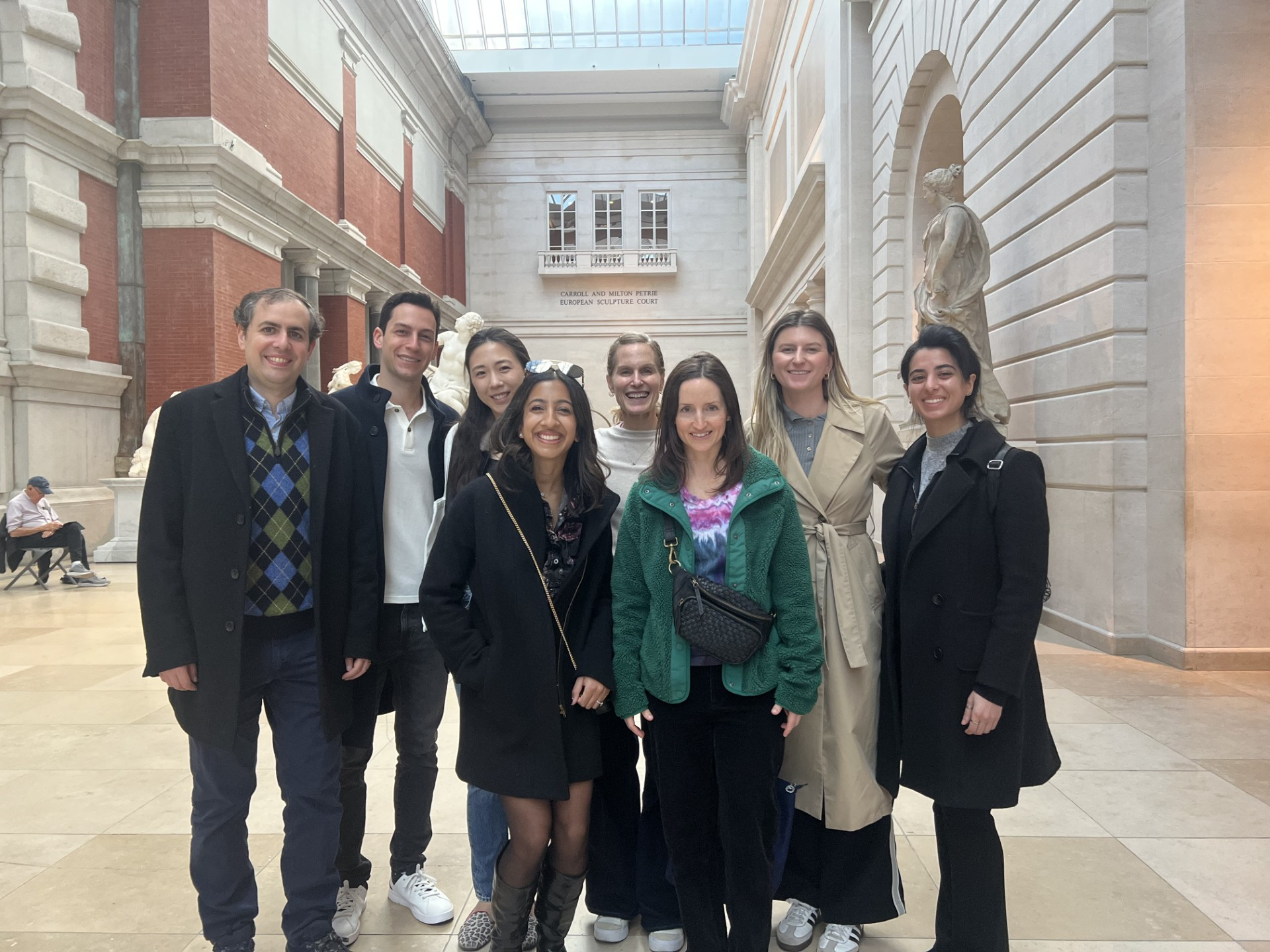
In November, members of our Emergency Medicine team joined Dr. Finkelstein at the Met. Dr. Lucy Willis said the program offered a welcome opportunity to step back from the intensity of clinical work. “The experience was relaxing and educational, and it allowed me to reconnect with the humanistic side of medicine,” she says. “Physicians spend a lot of time studying science, but not enough time reflecting on the human experience. Particularly as I’ve gotten older, that’s what keeps me going.”
In one exercise, participants selected a portrait that reminded them of a recent patient which sparked deep conversation. “It brought out truly meaningful insights,” Dr. Willis recalls. For her, the program reinforced the importance of seeing patients beyond their diagnoses and reconnecting with the purpose that drew her to medicine in the first place. “I would highly recommend this program to other healthcare professionals. It may even help prevent burnout and is a great way to connect with colleagues.”
As the program enters its fourth year, its impact is clear: Connecting Art & Medicine offers vital tools for sustaining empathy, fostering resilience and reminding clinicians why they chose this path. In a profession defined by science, this initiative proves that art can be just as essential for healing.