By Rahul Sharma, MD
Barbara and Stephen Friedman Professor and Chair, Department of Emergency Medicine, Weill Cornell Medicine
It used to be that when someone came to the Emergency Department after a bicycle accident, we had a general sense of what to expect: A fracture, a few lacerations, perhaps a concussion that required observation.
Today, the injuries we see are different in both kind and severity. On any given day, multiple patients are arriving with pelvic fractures more often associated with a car crash or traumatic brain injuries after being thrown from a bike. And more often now, we are also seeing pedestrians who were simply crossing the street being brought in after being struck.
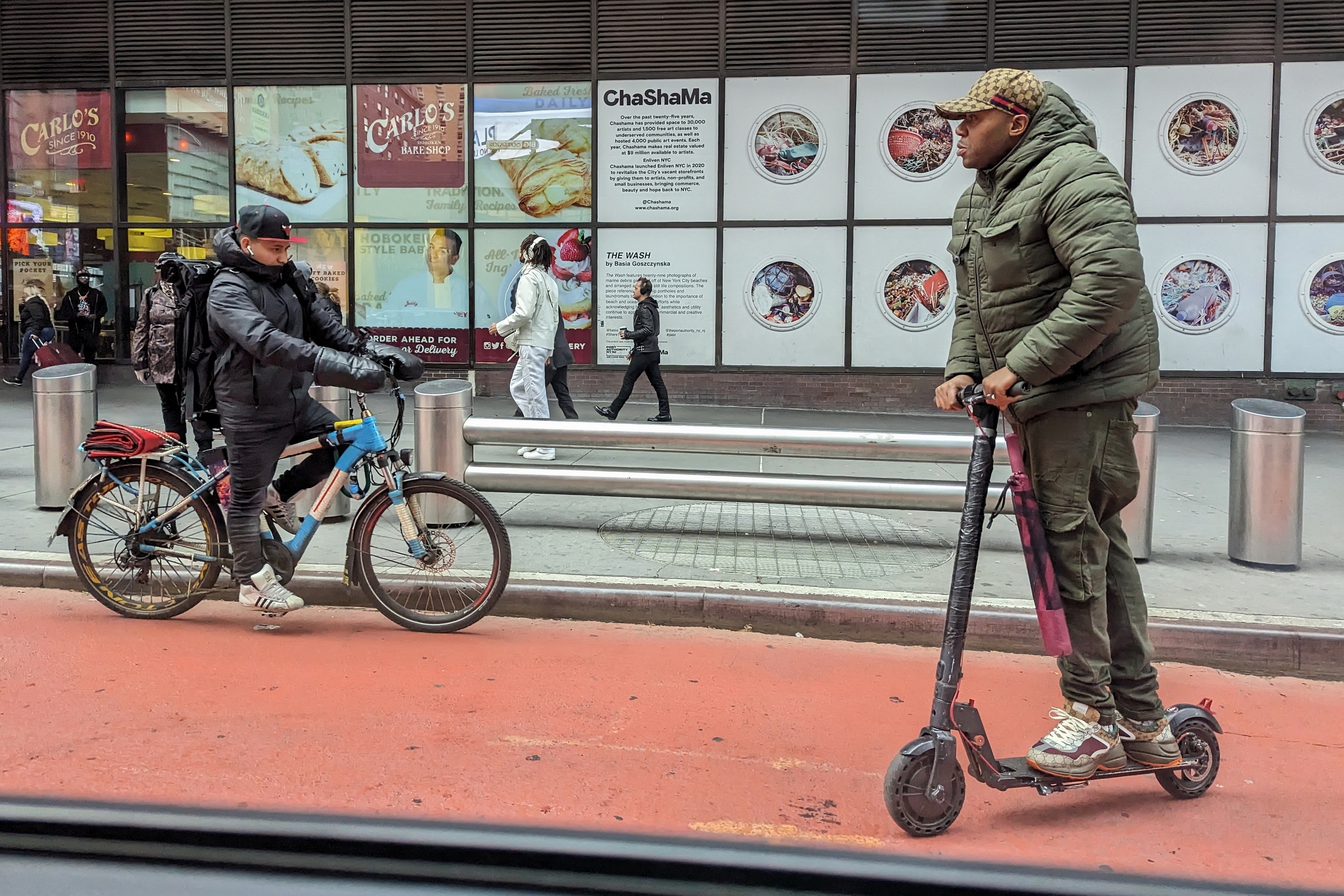
More often than not, there is a shared thread: an e-bike or a scooter.
These devices have become part of the rhythm of the city. They move people efficiently through crowded streets, power a large portion of the delivery workforce, and offer a practical alternative to congestion. In many ways, they represent progress.
But from where I stand, they are also adding to the risks we face every day.
At our institution, nearly one in five trauma cases now involves a micromobility device like an e-bike or scooter. That number is striking, but what matters more is what sits behind it.
It’s easy to think of an e-bike as just a bicycle with a little extra power. In reality, it behaves much more like a motorized vehicle. With speeds that can reach 25 to 30 miles per hour and the ability to accelerate quickly, the margin for error becomes smaller, and the consequences of a mistake grow significantly.
When a crash happens under those conditions, the body absorbs forces it wasn’t designed to withstand. The injuries reflect that. We see severe concussions, complex fractures, and internal injuries—patterns that more closely resemble what we associate with motorcycles or cars. Nearly a third of these cases involve injuries to the head, which can carry lasting consequences.
Our research on micromobility device-related injuries that we treat in our emergency department reinforces what we see at the bedside every day. Many of these incidents are not dramatic, high-speed collisions, but ordinary moments like a fall, an unexpected obstacle or a vehicle that simply didn’t see the rider in time. And in more than half of these cases, the rider was not wearing a helmet.
What’s also worth recognizing is that this isn’t limited to any one group. The average patient we treat is in their 30s, people in the middle of their lives, balancing work, family, and the pace of the city. The common thread is not age, but exposure to equipment that is evolving faster than our instincts.
There’s another part of this story that is easy to overlook until you see it firsthand. Not everyone we treat is a rider. Increasingly, we care for pedestrians who were struck in an instant by something moving faster than expected in a space that wasn’t anticipated.
And yet, for all the complexity, what lingers are the moments where the outcome might have changed if small choices like wearing a helmet, slowing down or taking that second look before turning, had been made differently.
As physicians, we meet people at the end of those moments, when the consequences are already fully visible. What I hope, in sharing what we are seeing, is that more of those decisions can be recognized earlier when there is still room to choose differently.
E-bikes and scooters are now part of how this city moves. That is not going to change. What can change is how we move within this new reality—how we pay attention, how we adjust, and how we look out for one another in spaces that are more shared than ever before.
Because from where we stand in emergency medicine, this is not just a story about innovation or convenience.
It is a story about consequences.
And increasingly, it is a story about prevention.
E-Bike and Scooter Rider Injury Prevention:
- Be aware of blind spots. Fast-moving e-bikes and scooters are often invisible to drivers, especially on the right side at intersections.
- Many injuries happen when mobility riders assume a green light equals safety. Drivers making turns are often scanning for pedestrians and cars, not smaller, faster vehicles.
- Wear helmets that are the right size for your head and appropriate for the device you are riding.
- For scooters, wear wrist guards.
- Keep micromobility devices off the sidewalks.
Pedestrian Injury Prevention:
- Look both ways on one-way streets.
- Check the bike lane before stepping off the curb.
- Establish eye contact with the riders so they are aware of you.
- Ditch noise-cancelling headphones so you can hear what’s coming at all times.
- Don't be distracted by your phone, especially when crossing the street.
- Be extra vigilant for micromobility devices, especially at dusk and night when there are more food deliveries, and pedestrians become harder to see.
For more information on E-bike and scooter safety, please tune in to the Back to Health Vodcast.